
 Posts
Posts


I have always felt that you can guide your own destiny to some extent. In my situation for instance, I always have seemed to be in the right place at the right time, and sort of had the perception that I was. Be it creative awareness or constantly reaching out for opportunities, I seemed to have things fall in my lap. Everyone knows at least 100 people. Of these people, some are closer than others, and some may be in a related industry, or in a business that can use my services. Sometimes they don't put two and two together, but that doesn't mean that I haven't or shouldn't. I love my work, enjoy it immensely and I'm good about being able to "see" my subjects in a great light. I am always talking about possibilities with friends and clients and it has generated business in unexpected ways.
About 1977 a gentleman and a couple of kids came into the studio in Carthage and he asked me if I had any Ektachrome Tungsten film. Well, that made the antenna come up....That is a professional film and I asked him what he needed it for. He said he was going to California to take one of his daughters to college and might want to take some night time pictures...and "by the way, my name is Byron Morgan and I'm a film maker for NASA". I introduced myself and got him a roll of the film. We talked for a minute and he asked me where Morgan Heights was. He then added that it was named after a farm his grandfather had. That opened the door to more conversation and I closed the studio, gave them the tour of Carthage, showed them Morgan Heights, had lunch with them and sent them on their way. I didn't think that I would hear from them again but three months later Byron called....Will you come to Washington D.C. and photograph one of my daughters weddings. While there we hit it off well and formed Byron Morgan and Associates, a film Company.
To be Continued...
Wednesday, May 12, 2010


Tuesday, May 11, 2010
The "heat" amounted to the thought that my portraits weren't "Professional" as they were done outdoors. That was silly in my mind...it was a matter of viewpoint and as far as I was concerned, that was the end of the conversation. The issue at hand that they didn't see coming was the wind of change. The next year I did 11 seniors, the next 150, then the photographers that had been in town for years started folding i.e. retiring.
The new business I was looking for came in the area of "Commercial work" or Annual Report Photography, Product Photography, and Editorial work. My first big break came from Joplin Printing in Joplin Missouri. Teledyne Neosho needed a brochure showing their capabilities within the Jet engine rebuild areas. All of the images had to be shot in 4 x 5 transparencies and there were about 30 images in all, most of which were in the factory itself. I toured the facility with the plant President and the artist in charge of the design of the brochure. He told us what he wanted in terms of items shot and the artist and I discussed the pictorial viewpoint I would use. There were several considerations to take into account especially when shooting on location. The light source had to be compensated for, the time to shoot each shot would take in actual shooting time as the "line had to be shut down for the shot to be made. The lighting and set up could be done in regular time but the line couldn't be moving in the photographs. To stop the production cost thousands so I had to minimize the actual down time. Changing the 4 x 5 sheets of transparency film on location, "setting" each location scouring it to rid it of objectionable items such as trash, logos on clothes, tools out of place, etc. The shoot was a rounding success and the Brochure was fabulous. I had done an image of a number of machined engine gears that seemed to be floating in space that took an award from The Professional Photographers of Missouri/Commercial Division. This success led to years of assignments from Teledyne Neosho and started me off on a commercial career.
The new business I was looking for came in the area of "Commercial work" or Annual Report Photography, Product Photography, and Editorial work. My first big break came from Joplin Printing in Joplin Missouri. Teledyne Neosho needed a brochure showing their capabilities within the Jet engine rebuild areas. All of the images had to be shot in 4 x 5 transparencies and there were about 30 images in all, most of which were in the factory itself. I toured the facility with the plant President and the artist in charge of the design of the brochure. He told us what he wanted in terms of items shot and the artist and I discussed the pictorial viewpoint I would use. There were several considerations to take into account especially when shooting on location. The light source had to be compensated for, the time to shoot each shot would take in actual shooting time as the "line had to be shut down for the shot to be made. The lighting and set up could be done in regular time but the line couldn't be moving in the photographs. To stop the production cost thousands so I had to minimize the actual down time. Changing the 4 x 5 sheets of transparency film on location, "setting" each location scouring it to rid it of objectionable items such as trash, logos on clothes, tools out of place, etc. The shoot was a rounding success and the Brochure was fabulous. I had done an image of a number of machined engine gears that seemed to be floating in space that took an award from The Professional Photographers of Missouri/Commercial Division. This success led to years of assignments from Teledyne Neosho and started me off on a commercial career.
Monday, May 10, 2010
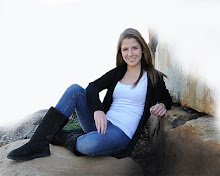
Senior Portraits
In 1972 I started opened my first Photographic studio in Carthage, Missouri after graduating from Grad School with my Masters degree. Up graduation I thought I would get a teaching job in Film or Still Photography and continue my fine art pursuits. Part of that interest was was fueled by the thought that if I was teaching on the college level I would have full access to a casting foundry, ceramics room, printmaking facilities, and welding supplies. 600 applications went out, 4 responses came back, all stating that with the cessation of the Draft, enrollments were down and positions were cut at the schools I had applied to.....there were no jobs. It became pretty clear that there was something I had to do.....create my own job. I had sworn up and down that I would NEVER own a studio......I had worked for Don Sothern in Springfield while in school and it just wasn't interesting enough to pursue as a life career. But in light of the employment circumstances, I figured I could do it for three or four years until the teaching market came back. As it all worked out, it has been the most amazing decision I could have made. Morgan Studio has opened doors for me that I would have never have dreamed of, giving me world travel, seeing things I thought I would never see, and the opportunity to meet people that I have admired from afar.
Part of the success of the business in the beginning was to be open to change and be knowledgeable about the capabilities of film and cameras. In the early 70's Digital was not a household word.....only scientific. The photographic studios of the time were mired in tradition and seemingly unable to change. The mood of the day, as the curtain was dropping on the late 60's, was to be natural, and your own person. I hated the studio style of portraits as they placed the individual/individuals in unlikely "poses", situations, and were very predictable. I felt as though I needed to do something different.
I had always enjoyed natural light and started photographing clients outdoors, or at their homes using window light. My first Senior portrait was Will Grey, photographed at the low falls at Morrow Mill. In fact, he was my only Senior portrait in 1972, "Class of 73". I took some heat from the other photographers in Carthage, there were three other studios, but I ignored it. I was looking for more business in areas they didn't pursue.
To be continued.....
Part of the success of the business in the beginning was to be open to change and be knowledgeable about the capabilities of film and cameras. In the early 70's Digital was not a household word.....only scientific. The photographic studios of the time were mired in tradition and seemingly unable to change. The mood of the day, as the curtain was dropping on the late 60's, was to be natural, and your own person. I hated the studio style of portraits as they placed the individual/individuals in unlikely "poses", situations, and were very predictable. I felt as though I needed to do something different.
I had always enjoyed natural light and started photographing clients outdoors, or at their homes using window light. My first Senior portrait was Will Grey, photographed at the low falls at Morrow Mill. In fact, he was my only Senior portrait in 1972, "Class of 73". I took some heat from the other photographers in Carthage, there were three other studios, but I ignored it. I was looking for more business in areas they didn't pursue.
To be continued.....
Saturday, May 8, 2010
Getting ready for Mondays session
I had forgotten how much paint a new floor takes to get where it isn't all sucked up into the wood.I painted on the 4th coat this morning as I have two sessions Monday.
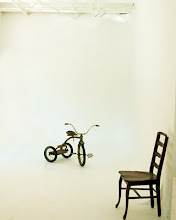
The coving on the floor and walls is looking good. Isn't infinity great....
The coving on the floor and walls is looking good. Isn't infinity great....
Friday, May 7, 2010
Architectual Issues in Imagery
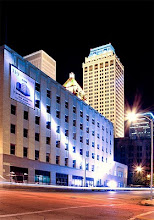
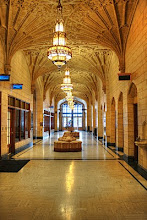
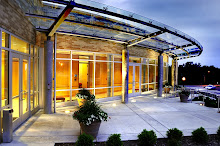
Architectural assignments are challenging from several points, primarily because of the lighting involved and perspective control. Many images will be exteriors and throughout the day the light is always changing, as night settles the interior/exterior lighting ratios come into play. This creates a problem as to the decision that must be made as to the final " look" of the image, i.e. Day or Night. If shooting an interior the "color" of the interior light is important as it must match the daylight color temperature of the light filtering in through the windows, if there is any in the image. Without the balance of color temperature and intensity the image will look unnatural.
Perspective comes into play with the problem of parallax, which is the convergence of vertical and horizontal lines. Our eyes and mind take care of this problem by "correcting it" and, in fact, we don't seem to notice it until we see a corrected image. It looks right in person.....but we don't seem to notice when viewing it in "real Time" that the top of the building looks smaller than the base. Correction of the parallax issue, makes the lines converge in a linear way that creates a visual perspective that makes the buildings top as wide as the bottom giving us a false perspective look. Using PC lenses ( perspective control ), a view camera, or select software can correct this problem. Morgan Studio has all of the above solutions.
Perspective comes into play with the problem of parallax, which is the convergence of vertical and horizontal lines. Our eyes and mind take care of this problem by "correcting it" and, in fact, we don't seem to notice it until we see a corrected image. It looks right in person.....but we don't seem to notice when viewing it in "real Time" that the top of the building looks smaller than the base. Correction of the parallax issue, makes the lines converge in a linear way that creates a visual perspective that makes the buildings top as wide as the bottom giving us a false perspective look. Using PC lenses ( perspective control ), a view camera, or select software can correct this problem. Morgan Studio has all of the above solutions.
Thursday, May 6, 2010
Commercial assignments..
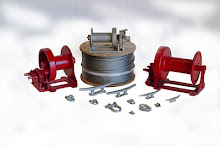
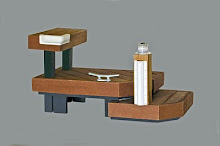
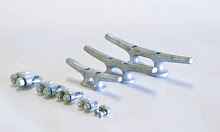
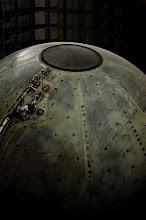
I really enjoy the commercial side of the photographic profession. All jobs are different,in challenging locations, and always have a problem to solve. It may be the lighting, background treatment, amount of equipment needed to make the image, some of what may be specialized, or something that is unique to my vision and experience. I have found that people view all things differently generally based on their familiarity with the item. The first impression I get is seemingly always tied up with texture and color, then shape. The longer I am around an item the more I can understand it as to its function, but the first impression will almost always lead me to the final image. Of course this is also tied into the desire of the client as to what the image should say to the viewer.
Subscribe to:
Posts (Atom)


-2.jpg)



















.jpg)


